What do Dutch people eat in a day?
The Dutch eat bread twice a day, with cheese or chocolate sprinkles, and have one warm meal at about 18:00. Snacks like kroket, raw herring and stroopwafels fill the gaps.
Typical dishes and their calories
Breakfast
Breakfast is bread: a couple of slices with butter and a topping, often Gouda, peanut butter or hagelslag, the chocolate sprinkles. One slice with butter and hagelslag is about 190 kcal. It comes with milk, tea or coffee, usually at home before school or work.
Lunch
Lunch is small and quick, between 12:00 and 13:00: sandwiches brought from home with cheese or ham, and a glass of milk or buttermilk. Office canteens serve much the same bread. Eating out, people order an uitsmijter, fried eggs on bread with ham or cheese, at about 600 kcal, or a broodje kroket.
Dinner
Dinner is the one warm meal of the day, eaten around 18:00. The classic plate is potatoes, vegetables and meat, or stamppot: potatoes mashed with kale, endive or sauerkraut, with a smoked sausage called rookworst and gravy, about 650 kcal. Pasta, nasi goreng and stir fries are just as common now.
Starters
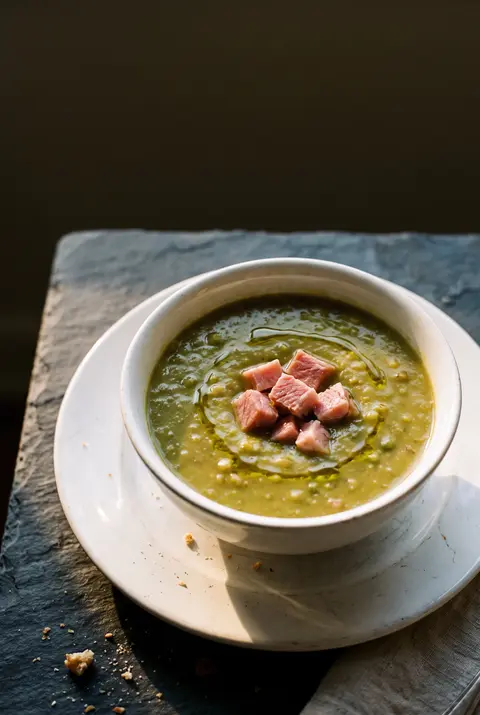
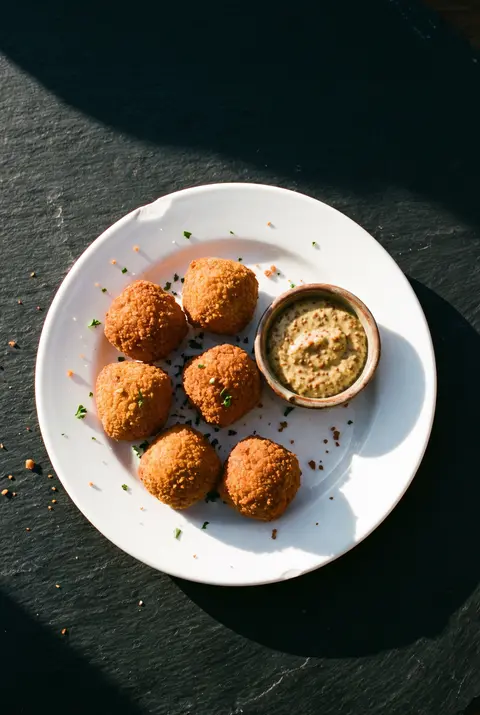
Before dinner out, or at a borrel, the Dutch after work drink, there are bitterballen: small round croquettes with a meat ragout filling, dipped in mustard. Six are about 300 kcal. Cubes of Gouda with mustard and a bowl of peanuts are the other classics. At home, erwtensoep, a thick pea soup, is a whole meal rather than a starter.
Desserts
After dinner many families have vla, a pourable custard, or yoghurt in a bowl. Appeltaart, a deep apple pie with cinnamon, comes with coffee and whipped cream, about 340 kcal a slice. The tompouce, a pink iced pastry filled with custard, is the bakery classic, and poffertjes, tiny pancakes with butter and powdered sugar, are a market treat.
Drinks
Coffee is the everyday drink, usually with one biscuit, mid morning and mid afternoon. Milk and buttermilk are still drunk with lunch. At a borrel it is beer, often a small 25 cl glass of pilsner at about 105 kcal, and jenever, a juniper spirit, is the old Dutch drink. Tea is drunk without milk.
Street food
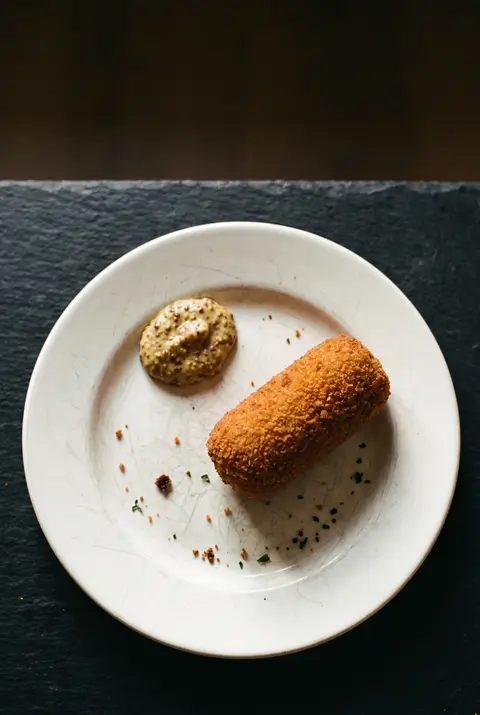
Street food means a herring stand, a chip shop or the snack wall. Hollandse Nieuwe herring is eaten raw with chopped onions from June, about 170 kcal each. Fries come in a cone with mayonnaise, and a kroket, about 190 kcal, comes from a little door in a coin wall. In winter, stalls sell oliebollen, fried dough balls eaten on New Year's Eve.
Normal there, odd elsewhere
Chocolate sprinkles on bread are a normal breakfast for adults too, and lunch is often a cold cheese sandwich with a glass of milk. Dinner is usually over by 19:00. A raw herring is lowered into the mouth by its tail, and fries come with mayonnaise. The Dutch also eat more liquorice, called drop, than anyone else, much of it salty.