What do Hungarians eat in a day?
Hungarians eat a light cold breakfast, a hot lunch around noon that starts with soup, and a smaller, often cold dinner around 18:00 to 19:00, with paprika in many dishes.
Typical dishes and their calories
Breakfast
Reggeli is early, often 6:30 to 8:00, and mostly cold: bread or a kifli roll with butter, salami or ham, cheese, sliced green pepper and tomato. Some eat eggs or körözött, a curd cheese spread with paprika. Coffee is the morning drink, and a pastry from the bakery on the way to work is a common breakfast too.
Lunch
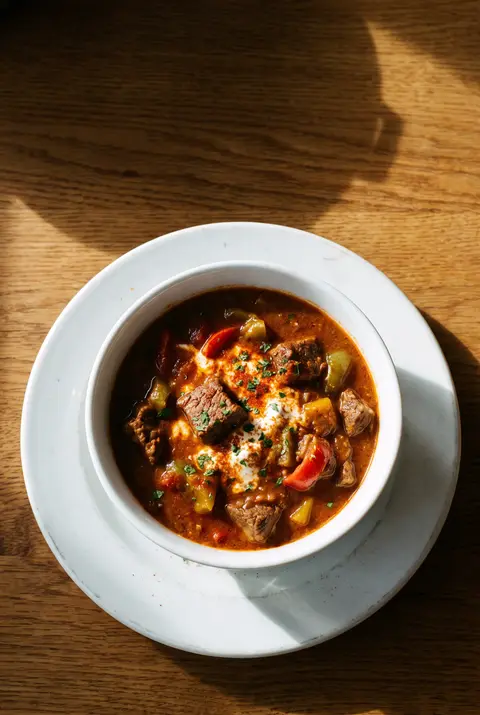
Ebéd, around 12:00 to 13:00, is the main hot meal and nearly always starts with soup: gulyásleves, the beef and paprika soup, about 380 kcal a bowl, or a lighter broth. Then comes a main such as pörkölt, a paprika stew, about 700 kcal with nokedli dumplings, or főzelék, a thick vegetable stew topped with a fried egg or meatballs.
Dinner
Vacsora, around 18:00 to 19:00, is smaller. In many homes it is cold again: bread with cheese, salami, pickles and peppers, or the rest of lunch. Lecsó, a stew of peppers, tomato and onion, often with sausage or egg, is a summer dinner. Restaurants serve hot dishes such as csirkepaprikás, chicken in a paprika and sour cream sauce.
Starters
Soup is the usual starter in Hungary, and there are many. Halászlé, a fish soup with hot paprika, about 300 kcal a bowl, is eaten on Christmas Eve. In summer hideg meggyleves, a cold sour cherry soup with cream, opens a meal. Hortobágyi palacsinta, a savoury pancake filled with meat stew under paprika sauce, is a classic restaurant starter.
Desserts
Dobos torta, sponge layered with chocolate cream under hard caramel, about 420 kcal a slice, and Somlói galuska, sponge with chocolate sauce, walnuts and cream, are the classic cakes. Rétes, strudel with apple, cherry, poppy seed or túró, about 300 kcal a slice, is everyday. Palacsinta are rolled with jam or walnuts, and bejgli rolls come at Christmas.
Drinks
Wine is drunk across the country, from sweet Tokaji to the reds of Eger, and in summer as fröccs, wine with soda water in set ratios, about 125 kcal for a glass of wine. Beer has grown popular since the 1940s. Pálinka, a fruit brandy of plum, apricot or pear, often homemade, is drunk as a shot before a meal, and Unicum is a dark herbal liqueur.
Street food
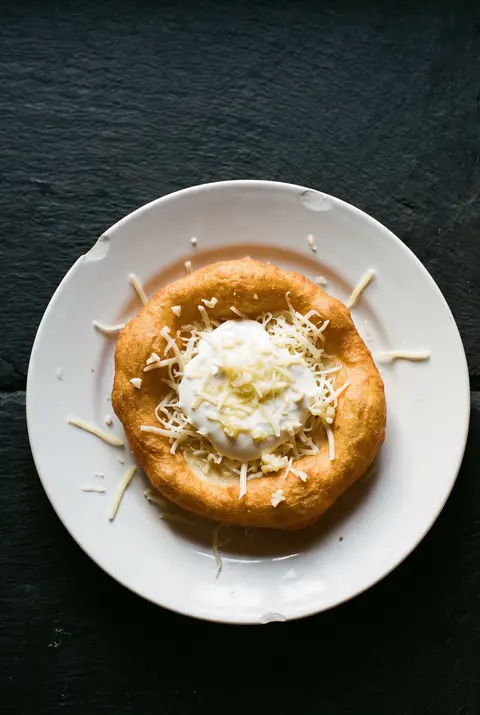
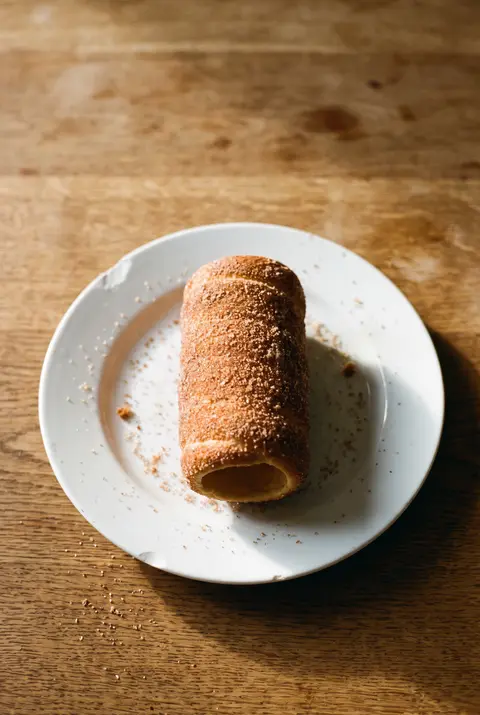
Lángos is the food of markets and the beaches of Lake Balaton: fried dough with garlic, sour cream and grated cheese, about 650 kcal each. Kürtőskalács, chimney cake rolled in sugar, cinnamon or walnut, is baked on a spit at fairs, about 700 kcal for a whole one. Bakeries sell pogácsa, small savoury scones, and market stands sell grilled kolbász sausage.
Normal there, odd elsewhere
Many Hungarians do not clink beer glasses, a custom linked to the 1849 executions in Arad. Pasta can be sweet and still be the main course: mákos tészta is noodles with ground poppy seeds and sugar. A cold fruit soup comes before the main course, and Túró Rudi, a chocolate covered curd cheese bar from the fridge, about 125 kcal, is a national snack.