What do people eat in Morocco?
Bread with every meal, salads and a tagine at lunch, couscous on Friday and sweet mint tea all day. Lunch is usually the biggest meal of the day.
Typical dishes and their calories
Breakfast
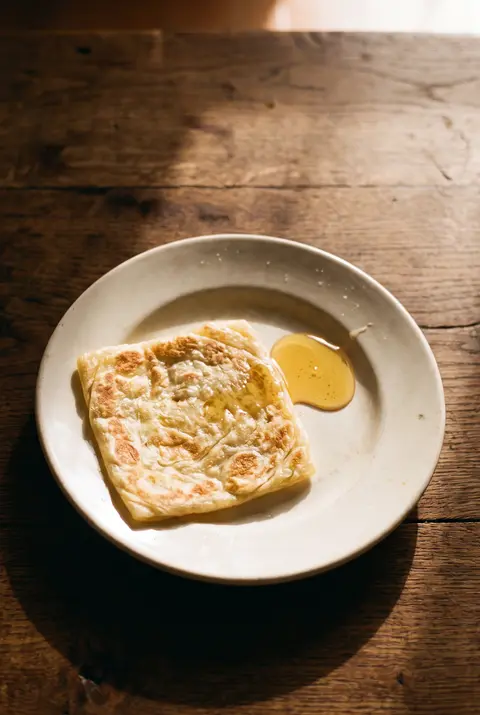
Breakfast is bread with something to dip it in: olive oil, honey, butter, olives or amlou, a spread of argan oil, almonds and honey. There is often msemen, a square folded flatbread cooked on a griddle, about 250 kcal each, or baghrir, a spongy semolina pancake. In winter some start with bissara, a broad bean soup. Mint tea or coffee with milk comes alongside.
Lunch
Lunch, around 13:00 to 14:00, is the main meal and is often eaten at home. It starts with cooked salads and bread, then a tagine, meat or fish stewed slowly with vegetables in a clay pot with a cone lid. A plate of chicken tagine with preserved lemon and olives is about 500 kcal. On Friday many families eat couscous after the midday prayer.
Dinner
Dinner is lighter and later, often from 20:00 or 21:00. It can be harira, a tomato soup with lentils, chickpeas and a little meat, about 250 kcal a bowl, leftovers from lunch, or bread with eggs, cheese and olives. In Ramadan the fast is broken at sunset with dates, harira and chebakia.
Starters
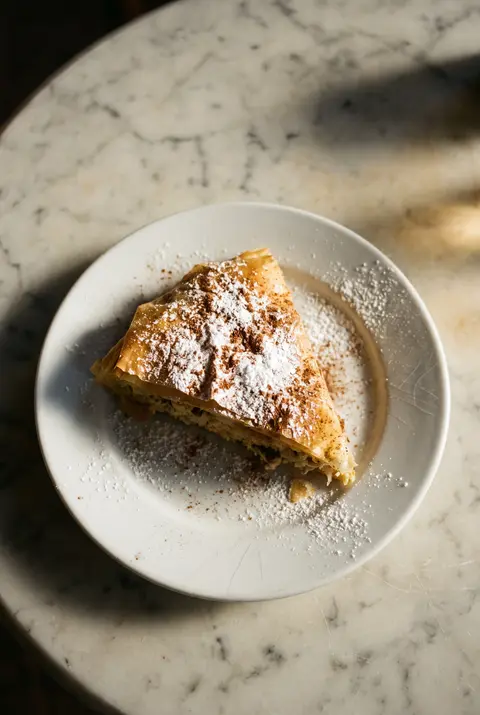
A Moroccan meal opens with several small salads, many of them cooked: zaalouk, a smoky aubergine and tomato salad, taktouka with peppers, and carrots with cumin. They are eaten with khobz, the round bread, which also works as a spoon. At weddings pastilla often comes first, a flaky pie of chicken, almonds and cinnamon, around 550 kcal a slice.
Desserts
After a meal it is usually fresh fruit, like orange slices with cinnamon. Pastries are for tea time and celebrations: kaab el ghzal, crescent biscuits filled with almond paste, and chebakia, fried sesame cookies soaked in honey that are made for Ramadan. Sellou, roasted flour with almonds and sesame, is another Ramadan sweet.
Drinks
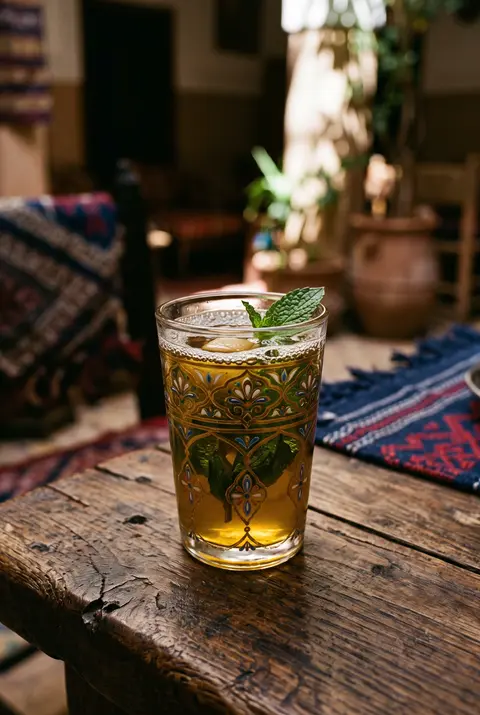
Mint tea is the national drink: gunpowder green tea, fresh mint and plenty of sugar, poured from high up into small glasses so it foams. A glass is about 40 kcal. Fresh orange juice is sold everywhere for little money, and avocado blended with milk is a juice bar favourite. In cafés the usual order is nous nous, half coffee and half milk.
Street food
In Marrakech the Jemaa el Fna square fills with food stalls every evening. Snail soup in a spiced broth is served in small bowls, and sfenj, ring doughnuts, are fried in the morning. Grilled sardines, kefta skewers, msemen filled with onion and grilled meat stuffed into bread are everyday street food.
Normal there, odd elsewhere
Many Moroccans eat from one shared dish in the middle of the table, with the right hand, using bread instead of cutlery. Tea is poured from a height on purpose to make foam, and turning down a glass can seem unfriendly. Pastilla is dusted with sugar and cinnamon even though the filling is chicken, and couscous is a Friday meal in many homes.