What do people in the Philippines eat in a day?
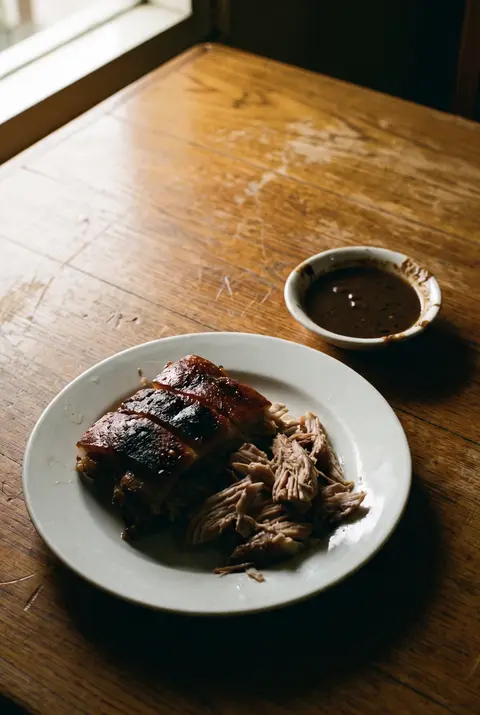
Filipinos eat three meals a day with rice at the centre, plus merienda, a snack in the morning and another in the afternoon. Adobo, sinigang and pancit are everyday dishes, and a whole roast pig turns up at every fiesta.
Typical dishes and their calories
Breakfast
Breakfast is silog: garlic fried rice and a fried egg with a meat, such as tapa (cured beef), longganisa (a sweet sausage), tocino or corned beef. The name tells you which one, so tapsilog has tapa and longsilog has longganisa. A plate of longsilog is about 700 kcal. Lighter mornings are pandesal, small soft bread rolls, or champorado, a chocolate rice porridge.
Lunch
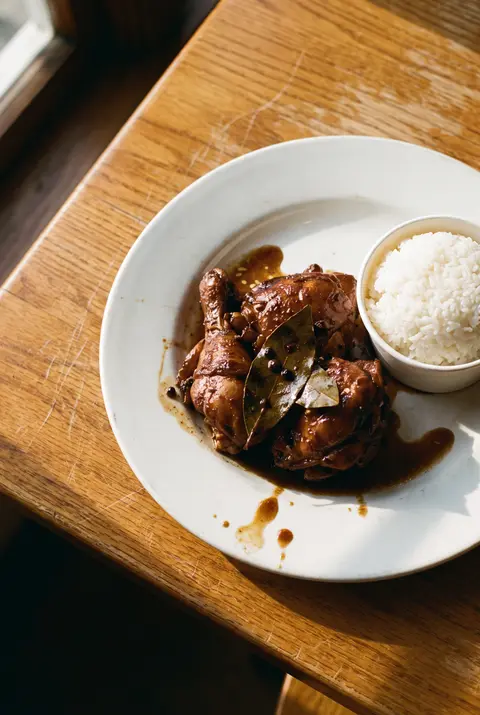
Lunch is rice with a dish or two on top. Adobo, meat stewed in vinegar, soy sauce and garlic, is the best known, and a plate with rice is about 720 kcal. Sinigang, a sour soup with pork or fish and vegetables, and tinola, a light chicken soup with ginger and chayote, are just as common.
Dinner
Dinner looks like lunch: rice, a main and something soupy, shared from the middle of the table. Kare-kare is oxtail and vegetables in a peanut sauce, served with shrimp paste. Fried food comes with a dip, vinegar with onions or soy sauce with calamansi squeezed in. Inasal is chicken grilled after a soak in vinegar, calamansi and lemongrass.
Starters
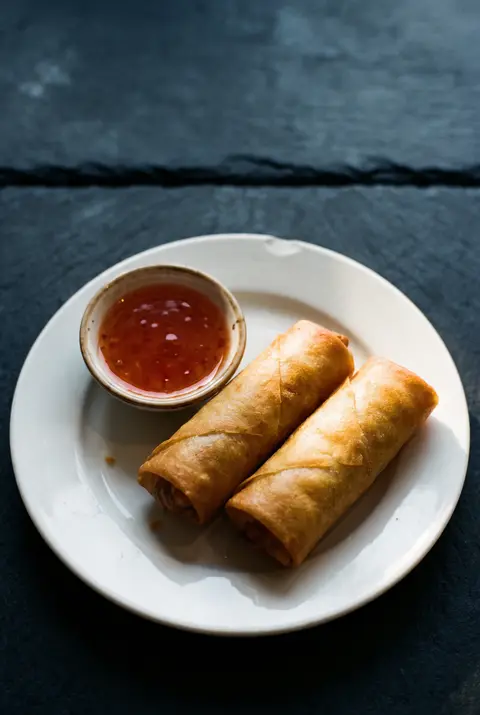
There are no starters in the usual sense. Everything goes on the table at once. The closest thing is pulutan, food you eat with a drink: sisig, chopped pork cooked with onions and chillies and served sizzling with an egg, chicharon (pork rinds) and grilled pork barbecue. Lumpia, fried spring rolls, are on every party table, about 250 kcal for two.
Desserts
Halo-halo means mix-mix: shaved ice with sweet beans, banana, jackfruit, ube (purple yam) and coconut milk, stirred together with a long spoon. Leche flan, a dense caramel custard, is about 180 kcal for a 100 g slice. At Christmas there is bibingka, a rice cake, and puto bumbong, a purple rice cake.
Drinks
Beer is the drink that goes with pulutan, and a 330 ml bottle is about 140 kcal. Liquor is shared the same way, with a plate of sisig or peanuts in the middle. On the street, taho is soft tofu with sago pearls and a brown sugar syrup, eaten with a spoon or drunk through a straw.
Street food
Street food comes off a charcoal grill in the afternoon. Isaw is grilled chicken or pig intestine on a stick, dipped in spiced vinegar. Fish balls and kwek-kwek, quail eggs in orange batter, are fried at carts. Banana cue is a banana coated in burnt brown sugar, and turon is banana and jackfruit fried in a spring roll wrapper.
Normal there, odd elsewhere
Filipino spaghetti is a local take on bolognese with slices of hot dog in the sauce. Balut is a boiled duck egg with the embryo inside: you crack a hole in the top and drink the broth first. At a boodle fight, food is piled on banana leaves down a long table and everyone eats with their hands.