What do Germans eat in a day?
Germans start with bread rolls, often eat warm at midday and have Abendbrot, a cold supper of bread, cheese and cold cuts, at about 18:00. On Sundays there is coffee and cake in the afternoon.
Typical dishes and their calories
Breakfast
Breakfast is bread: fresh Brötchen, crusty rolls from the bakery, or slices of dark rye or wholegrain bread, with butter, cheese, cold cuts, jam, honey or chocolate spread. A roll with butter and jam is about 270 kcal. At the weekend there is a boiled egg and more time, and coffee is the usual drink.
Lunch
Mittagessen, between 12:00 and 13:00, has long been the main warm meal of the day: meat, potatoes or noodles and vegetables. Many people now eat it in the canteen at work or the Mensa at university, with dishes like Schnitzel at about 470 kcal or a plate of Spätzle. Families who eat warm in the evening keep lunch small.
Dinner
Abendbrot, evening bread, is eaten at about 18:00 and looks like breakfast: dark bread, cheese, sliced sausage, pickles, sometimes a soup or salad, with tea. Many households now eat their warm meal in the evening instead. A Sunday roast like Schweinebraten with Knödel, potato or bread dumplings, and gravy is about 800 kcal.
Starters
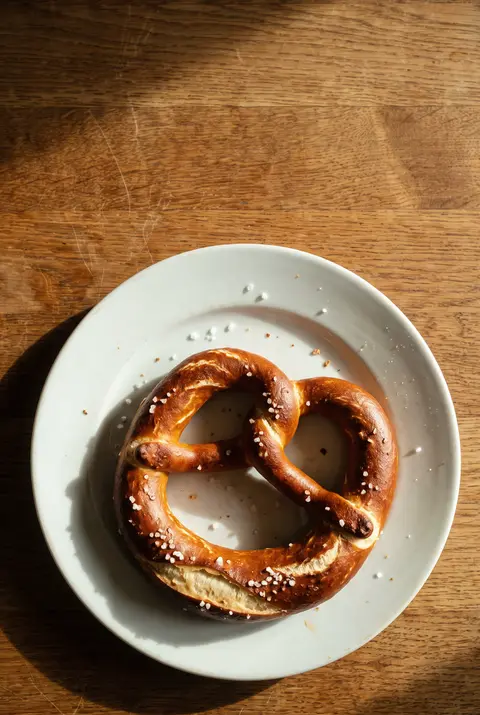
Starters are simple: a soup first, like Kartoffelsuppe, or Leberknödelsuppe in Bavaria, or a small salad. From mid April until 24 June it is Spargel season, white asparagus, served as a starter or as the whole meal with potatoes, ham and hollandaise. In a beer garden people share Obatzda, a spiced cheese spread, with a Brezel at about 250 kcal.
Desserts
The big sweet moment is Kaffee und Kuchen, coffee and cake at about 15:00 or 16:00, above all on Sundays. Classics are Käsekuchen made with quark, Apfelkuchen, plum cake in late summer and Schwarzwälder Kirschtorte with cherries and cream, about 330 kcal a slice. After a warm meal there may be a pudding or Rote Grütze, red berries with vanilla sauce.
Drinks
Beer is brewed all over Germany, from Pils in the north to wheat beer in Bavaria, and half a litre of lager is about 215 kcal. Sparkling mineral water is the default water, and Apfelschorle, apple juice with sparkling water, is drunk at the table by children and adults. Riesling comes from the Mosel and the Rhine, and Glühwein is drunk at Christmas markets.
Street food
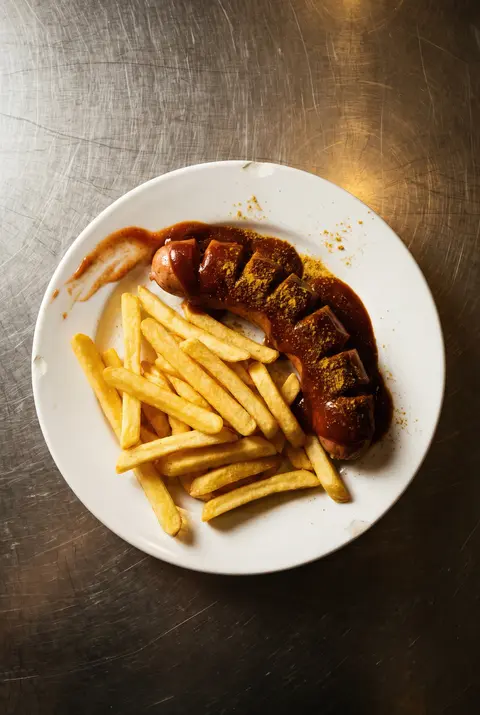
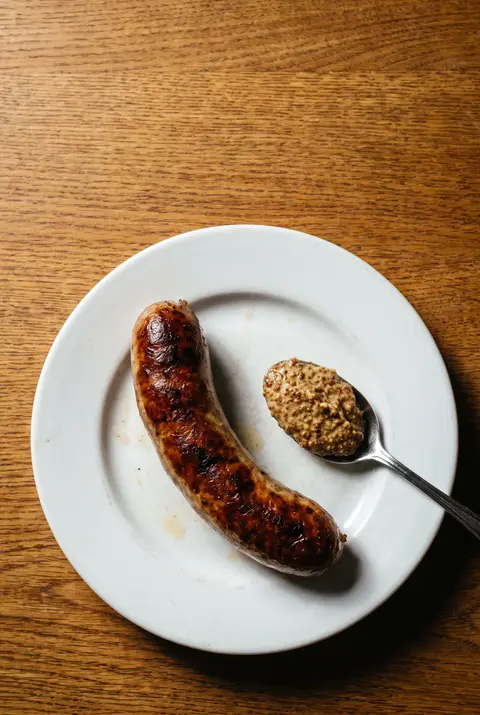
Currywurst, a sliced pork sausage with curry ketchup, was first sold in Berlin in 1949, and about 800 million are eaten a year, about 500 kcal each before fries. Döner kebab in flatbread, about 700 kcal, is just as common, made popular by Turkish Berliners from the 1970s. A Bratwurst in a roll, a Brezel and a Fischbrötchen in the north fill the rest.
Normal there, odd elsewhere
Supper can be cold, bread, cheese and sausage at 18:00, and nobody finds that strange. Water at the table comes with bubbles unless you ask for still. Shops close on Sunday, so the bakery is often the one place open in the morning. And Spargel season ends on the same day every year, 24 June, whatever the weather.