What do Russians eat in a day?
Russians eat porridge, eggs or syrniki for breakfast, a lunch that starts with soup such as borscht, and dinner around 19:00, with black tea after most meals.
Typical dishes and their calories
Breakfast
Zavtrak is eaten between 7:00 and 9:00. Kasha, a porridge of buckwheat, oats or semolina, is the classic, along with fried eggs, open sandwiches with cheese or sausage, and syrniki: small fried pancakes of tvorog curd cheese, about 330 kcal for three, served with smetana or jam. Tea comes with it, and coffee more and more in cities.
Lunch
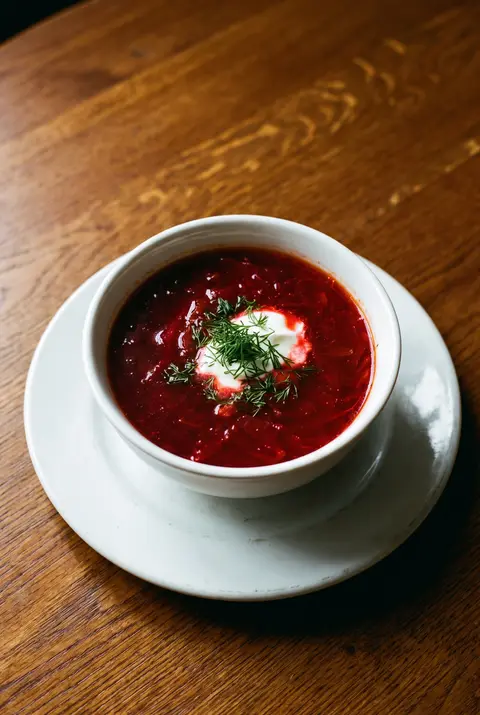
Obed, the main meal, comes around 13:00 to 15:00 and starts with soup. Borscht with beetroot and cabbage, about 250 kcal a bowl, or shchi, a cabbage soup, is the first course. The second is meat or fish with buckwheat, potatoes or pasta. On weekdays many cafes and canteens sell this as a set business lunch.
Dinner
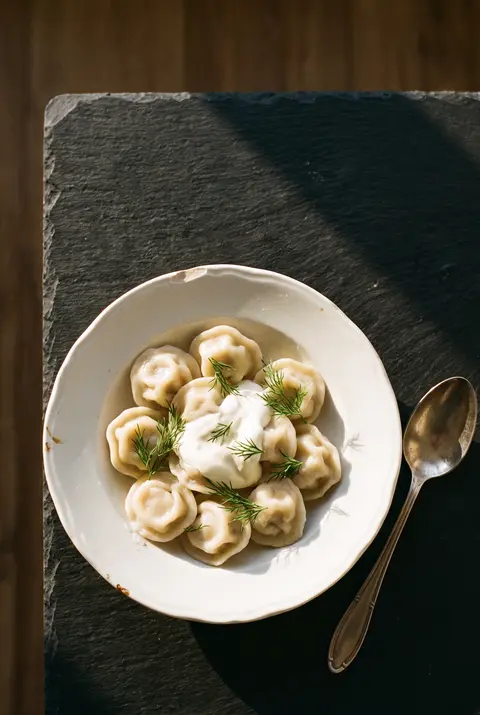
Uzhin is around 19:00 to 20:00 and is often a lighter repeat of lunch: kotlety, meat patties with mashed potato, pelmeni from the freezer with smetana, about 550 kcal a plate, or fried potatoes with mushrooms. It usually ends with tea and something sweet, such as biscuits, sweets or jam.
Starters
Zakuski are the cold starters that cover the table at any gathering: pickled cucumbers and tomatoes, salted herring with onion, rye bread, salo, cold cuts and salads. Olivier salad, diced potato, egg, peas, pickles and sausage in mayonnaise, about 390 kcal for 200 g, is on almost every New Year table, next to herring under a fur coat.
Desserts
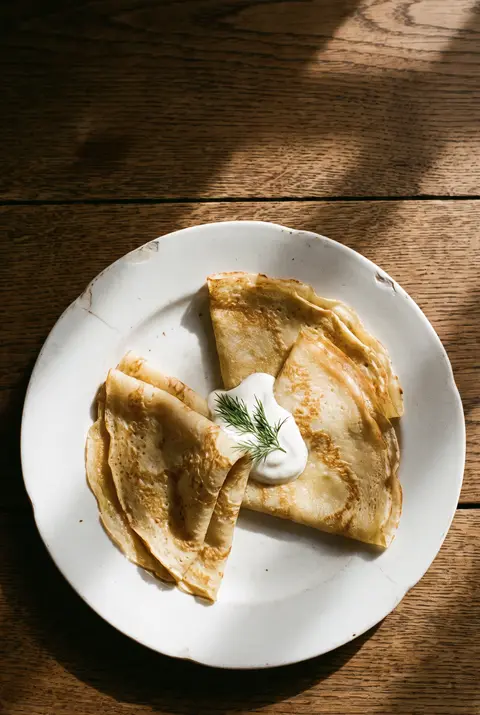
Desserts are often baked at home. Medovik, a layered honey cake, and Napoleon, a layered pastry cake with custard, are the classic cakes for a birthday. Blini with jam, honey or condensed milk work as dessert too, and in the week of Maslenitsa, at the end of winter, people eat blini every day.
Drinks
Black tea is the everyday drink, often with lemon and sugar or a spoon of jam. In summer people drink kvas, a fermented rye bread drink, about 135 kcal per half litre. Kefir, about 150 kcal a glass, is drunk at breakfast or before bed. Vodka, 65 kcal a shot, belongs to celebrations and is drunk neat with food and zakuski.
Street food
Street food in Russian cities means pirozhki, baked or fried buns with cabbage, potato or meat, blini with fillings from chains such as Teremok, and shawarma from kiosks on many corners. In summer shashlik, meat grilled on skewers, is cooked outside at dachas and in parks. Pelmeni are sold frozen in every supermarket for a quick dinner.
Normal there, odd elsewhere
Soup is eaten every day, even in summer, when it turns into okroshka: chopped vegetables, egg and meat in cold kvas or kefir. Mayonnaise and smetana go on salads, soups and pelmeni alike. Many families spend summer weekends at a dacha growing cucumbers and berries, then pickle and make jam for winter. An empty bottle is taken off the table, never left on it.