What do people eat in Egypt?
Egyptians eat ful medames, slow cooked fava beans, with flatbread for breakfast, have their main meal at lunch and keep the evening light. Koshari, ta'meya and tea are part of every day.
Typical dishes and their calories
Breakfast
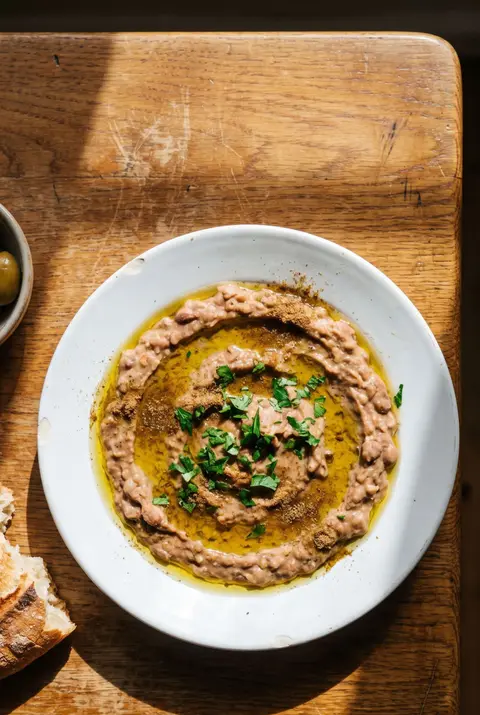
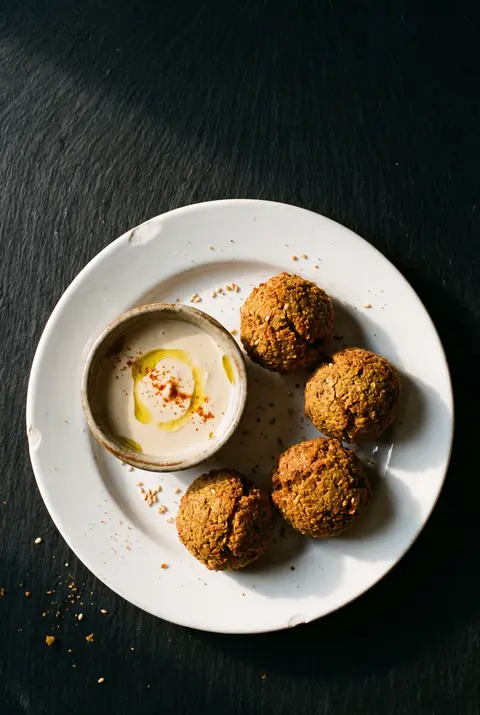
Breakfast is ful medames: fava beans cooked slowly with spices and served with olive oil and cumin, scooped up with aish baladi, the wholegrain flatbread. Britannica calls ful the national food. A bowl of about 250 g is around 330 kcal. Next to it come eggs, pickled vegetables and ta'meya, Egyptian falafel made with fava beans instead of chickpeas, often in a pita with tahini and greens. Four ta'meya are about 230 kcal.
Lunch
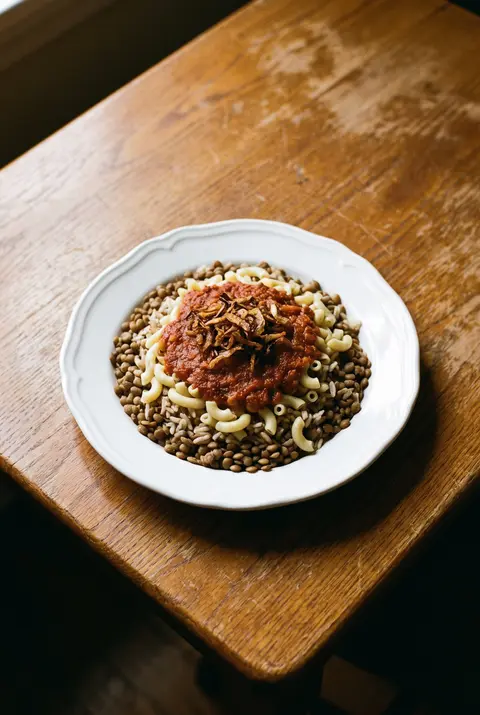
Lunch is the main meal of the day. A family classic is molokhiya, a thick green soup of finely chopped jute mallow leaves served with chicken or meat. Mahshi, vegetables stuffed with rice, and kofta, spiced meatballs, are everyday dishes too. Out of the house, people eat koshari: rice, lentils and macaroni under a spiced tomato sauce, chickpeas and fried onions, about 640 kcal a plate.
Dinner
Dinner is light. Egyptians tend to have a snack or a small meal in the evening rather than a big dinner, and keep the large dinner for special occasions. During Ramadan the day turns around: the fast is broken just after sunset, and whole extended families meet at one table.
Starters
Bread is on the table at every meal, with tahini and pickled vegetables to go with it, and Egypt has two kinds: aish baladi made with whole grain and aish shami made with white flour. For celebrations there is fatta: rice, chunks of lamb and pieces of aish baladi under a tomato or vinegar sauce.
Desserts
Basbousa is a semolina cake soaked in syrup, about 300 kcal a piece. Om ali is a warm bread pudding, around 420 kcal a bowl. Roz bel laban, rice pudding, is about 200 kcal a cup. Konafa, pastry with nuts, and qatayef, small filled pancakes, are the sweets of Ramadan evenings.
Drinks
Tea is the national drink and is often served with mint. A glass with two teaspoons of sugar is about 30 kcal. Coffee is the other daily drink. Juice stands press sugar cane juice, called asab, and karkade, made from hibiscus, and sahlab, a thick creamy drink, are the other classics.
Street food
Koshari began on food carts and now has shops of its own, cheap enough for a working lunch. Ta'meya comes in a pita with tahini and greens. Hawawshi is bread stuffed with spiced minced meat and baked until crisp, about 600 kcal. Feteer meshaltet, a flaky layered pastry, is eaten savoury with cheese or sweet with cream.
Normal there, odd elsewhere
Falafel probably started in Egypt, where it is made with fava beans and called ta'meya. Koshari puts rice, pasta and lentils on one plate, contains no meat, and was listed by UNESCO as intangible cultural heritage in 2025. In medieval Cairo, ful simmered all night in huge pots called qidras so the city had breakfast in the morning.