What do people eat in Lebanon?
Lebanese days start with man'ouche or foul, the main meal is a late family lunch, and evenings out mean a table of mezze shared with arak.
Typical dishes and their calories
Breakfast
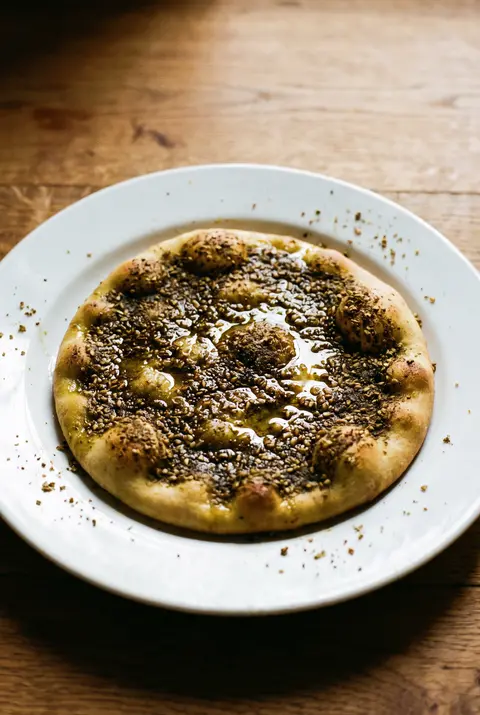
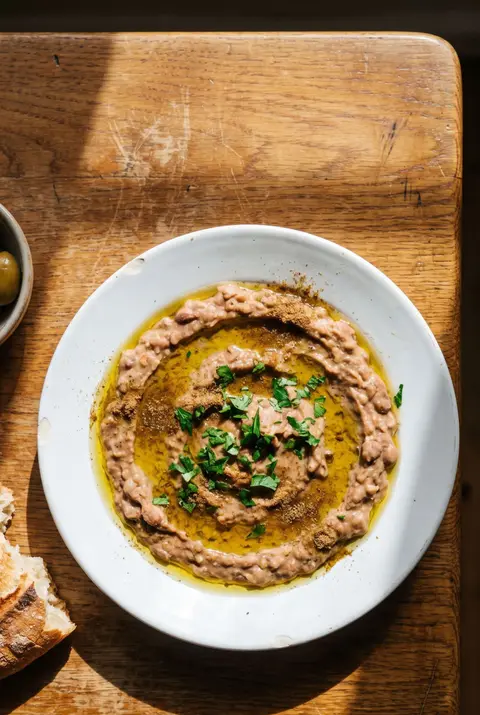
Breakfast is called terwika. On the way to work many people buy a man'ouche, a flatbread with za'atar and olive oil, about 450 kcal, fresh from a bakery that opens before 6:00. At home the table has foul mdammas, labneh with olive oil, cheese, olives, tomatoes, cucumbers and mint, all scooped up with flatbread and black tea.
Lunch
Lunch is the main meal, usually from about 14:00. At home it is a cooked dish such as mujaddara, lentils and rice with fried onions, or a stew of green beans or okra over rice. Sunday lunch is the long family meal, often a full mezze followed by grilled meat, and it can last all afternoon.
Dinner
Dinner is lighter and later, often after 20:00, and at home can be leftovers, labneh, cheese and bread. Going out means a restaurant mezze followed by mashawi, grilled skewers of shish taouk chicken, kafta or lamb, with garlic toum and bread. The meal often ends with a plate of fresh fruit.
Starters
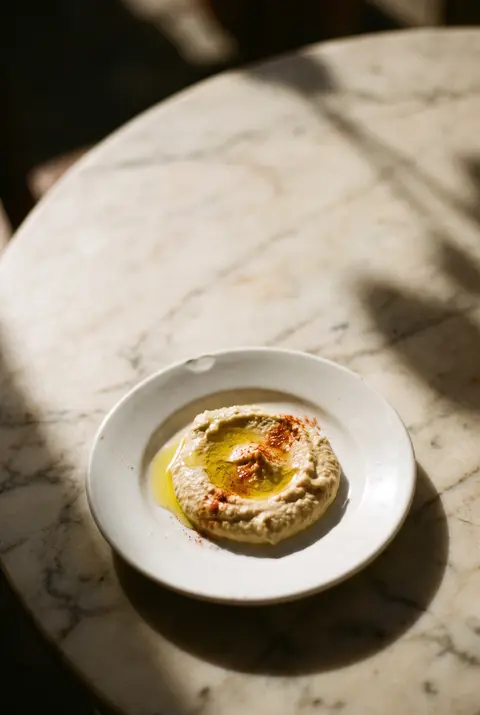
Mezze is a spread of small dishes for the whole table, and restaurants can bring 30 or more. Hummus, about 80 kcal for two spoonfuls, sits next to moutabal, tabbouleh with lots of parsley and little bulgur, fattoush with crisp bread, stuffed vine leaves, fried kibbeh and sambousek pastries.
Desserts
Knefeh is warm soft cheese under semolina pastry and syrup, about 450 kcal a plate, and in Beirut and Tripoli it is also eaten for breakfast in a sesame bun. Baklava, maamoul date cookies at Easter and Eid, and meghli, a spiced rice pudding made when a baby is born, are the other classics.
Drinks
Arak, an anise spirit, is the drink of the mezze table: mixed with water and ice it turns milky white. Lebanese coffee is boiled in a small pot, often with cardamom, and served in tiny cups. Lebanon also makes wine in the Bekaa Valley, and jallab, grape molasses with rose water and pine nuts, is a summer drink.
Street food
Shawarma is everywhere: chicken in flatbread with garlic toum and pickles, about 600 kcal, or beef with tahini sauce. Falafel sandwiches, about 230 kcal for four balls before the bread, come with tahini and vegetables. Bakeries sell man'ouche with za'atar, cheese or meat all day, often for under a dollar.
Normal there, odd elsewhere
Ask for a white coffee and you get hot water with orange blossom water and no coffee at all, served after a meal. Kibbeh nayyeh is raw lamb with bulgur, eaten with olive oil and mint. In spring people snack on green almonds and sour green plums dipped in salt, and bread is used as the spoon at almost every meal.