What do people eat in Israel?
Israelis start with a savoury breakfast of eggs, cheese, salad and bread, eat their main meal at lunch and keep the evening light. Hummus, falafel and shawarma in pita fill the gaps, and Friday night is the big family dinner.
Typical dishes and their calories
Breakfast
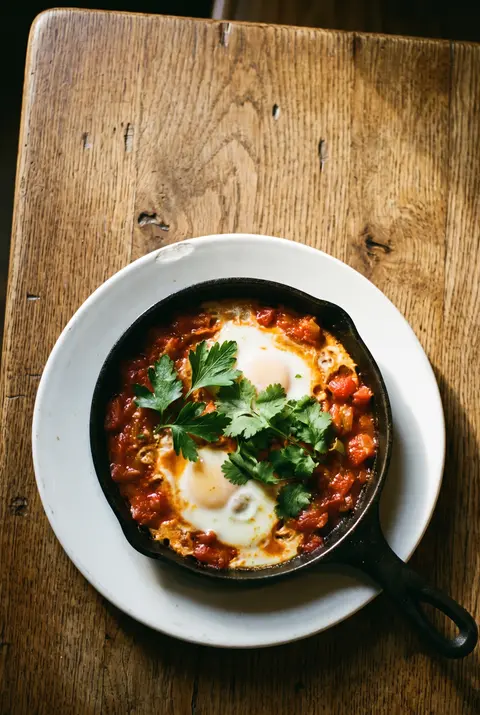
The Israeli breakfast began on the kibbutz, where farm workers needed a big meal before work. It is still savoury: eggs, soft cheeses and labneh, olives, bread and a chopped salad, with fresh orange juice and coffee. Hotels lay it out as a buffet, and cafes in Tel Aviv and Jerusalem serve it at any hour. Shakshuka, eggs poached in a tomato and pepper sauce, is a later addition, about 330 kcal a pan.
Lunch
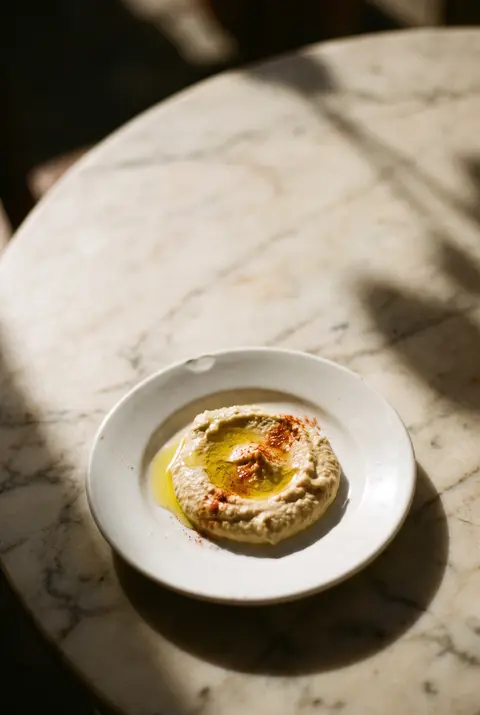
Lunch is the main meal of a working day. Hummus in pita is a common school lunch, and many people will go out of their way for a plate at a hummusia, a place that sells only hummus. A plate of about 250 g is around 420 kcal before the pita. Canteens serve turkey schnitzel with rice or ptitim, the small toasted pasta first made in the early years of the state as a stand in for rice.
Dinner
A weekday dinner is often light and much like breakfast: bread, cheese, yoghurt, eggs, olives and salad. Friday is different. The Shabbat dinner is the big meal of the week, eaten at home with family and opened with challah, the braided egg bread. Kosher rules shape many homes and restaurants, so meat and dairy are not served in the same meal.
Starters
Meals out begin with salatim, small salads and dips set on the table together: hummus, tahini, pickled cucumbers, cooked vegetable salads and amba, a mango pickle sauce. Two tablespoons of hummus are about 80 kcal. Bourekas, flaky pastries filled with cheese, potato or spinach and topped with sesame, are a snack at any time, about 330 kcal for a 100 g pastry.
Desserts
Malabi, a creamy pudding that came from Turkey, is a common dessert. Rugelach, small rolled pastries with chocolate or cinnamon, are about 120 kcal each. Halva, a sweet made of sesame, and knafeh, hot cheese pastry soaked in syrup, are sold at markets and bakeries. At Hanukkah, bakeries fill up with sufganiyot, doughnuts filled with red jam, custard or dulce de leche, about 270 kcal each.
Drinks
Coffee is drunk all day, either Turkish style, boiled in a small pot, or as a cappuccino with breakfast. Fresh orange juice comes with breakfast, and street stands press pomegranate juice. Limonana, lemonade blended with mint, is the summer drink, and arak, an anise spirit, is poured when friends get together.
Street food
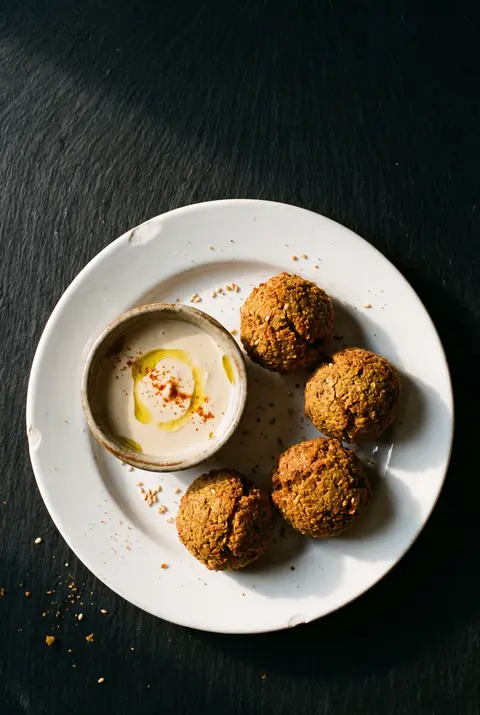
Falafel is the classic street food: fried chickpea balls in pita or laffa with salad, tahini and fried eggplant, about 550 kcal a sandwich. Sabich, from the Iraqi Jewish kitchen, is pita with fried eggplant, a boiled egg, potato, tahini and amba, about 600 kcal. Shawarma is sliced off a turning spit into pita with salads and sauces, also around 600 kcal.
Normal there, odd elsewhere
Breakfast is a full table of salads, cheese and eggs, and some places in Tel Aviv and Jerusalem serve it around the clock. Turkey takes the place of veal in the schnitzel. In kosher hotels the breakfast buffet is dairy, so there is no meat on it at all.