How many calories in a glass of milk
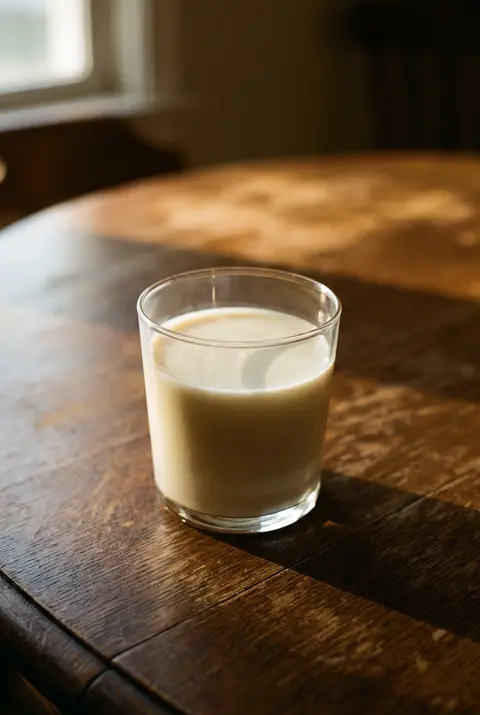
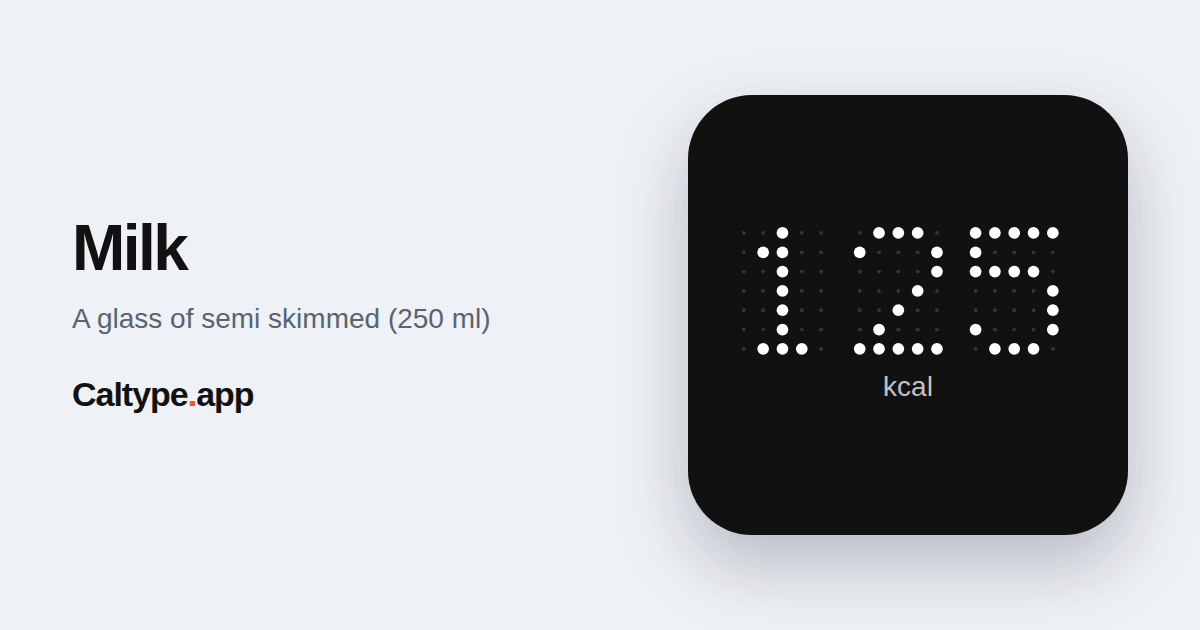
A 250 ml glass of semi skimmed milk has 125 kcal, with 9 g of protein.
Portion
To burn it off
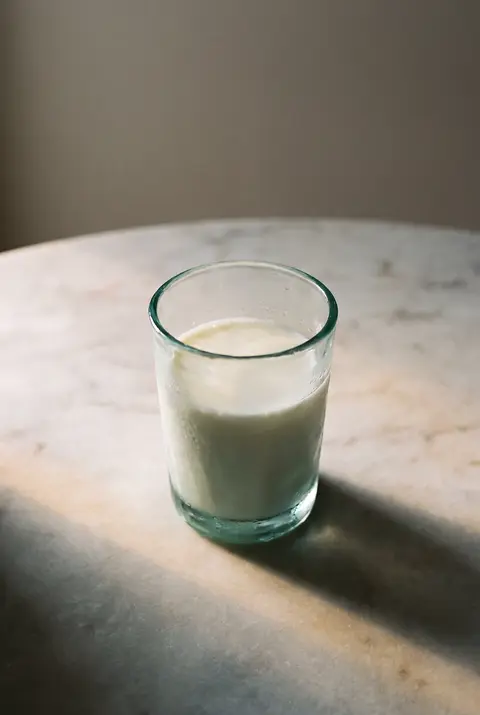
Milk is protein, fat and its own natural sugar in roughly equal parts. The fat is the only thing that really changes between the cartons.
A glass of semi skimmed is 125 kcal and whole milk is 160, so the gap is 35. Over one glass that's not much, over a day of brews it adds up.
Most of the milk people drink isn't in a glass at all. It's the splash in five cups of tea and the pour on the cereal.
Tips
- 1Switch the green top to the red one, or the blue to the green, and change nothing else.
- 2Keep whole milk for the coffee you really care about and semi for the rest.
- 3A glass of milk after training is cheap protein, no shaker needed.
Where it comes from
People began using animal milk soon after they started keeping cattle, sheep and goats. Traces of milk fat in more than 2,200 ancient pots show it was already being processed in Anatolia, the Levant and southeastern Europe in the seventh millennium BC, around 8,500 years ago. That pushed the start of dairying back some 2,000 years from what scientists had thought before.
Where does our food come from? · Source: University of Bristol, A potted history of milk (study in Nature, 2008)
Just type it
glass of semi skimmed milk
In Caltype you type what you ate like a note to yourself, and it's counted for you. No weighing, no scrolling through a database.
Share
Questions
Is whole milk much higher than semi skimmed?
A 250 ml glass of whole is 160 kcal against 125 for semi, so 35 more.
How much protein is in a glass of milk?
About 9 g in semi skimmed and 8 g in whole.
How do I count the milk in my tea?
Type it with the tea, like "tea with milk", and Caltype counts the splash.
Does milk have sugar in it?
Yes, its own sugar called lactose. That's the 12 g of carbs in a glass, and it's the same in skimmed, semi skimmed and whole.
Is lactose free milk lower in calories?
No, it's about the same. The lactose is split into simpler sugars rather than taken out, which is why it tastes a little sweeter.
Did you know?
Whole milk is about 88% water. All the fat, protein and milk sugar fit into the other 12%.
Drink facts · Source: USDA FoodData Central