How many calories in frozen yoghurt
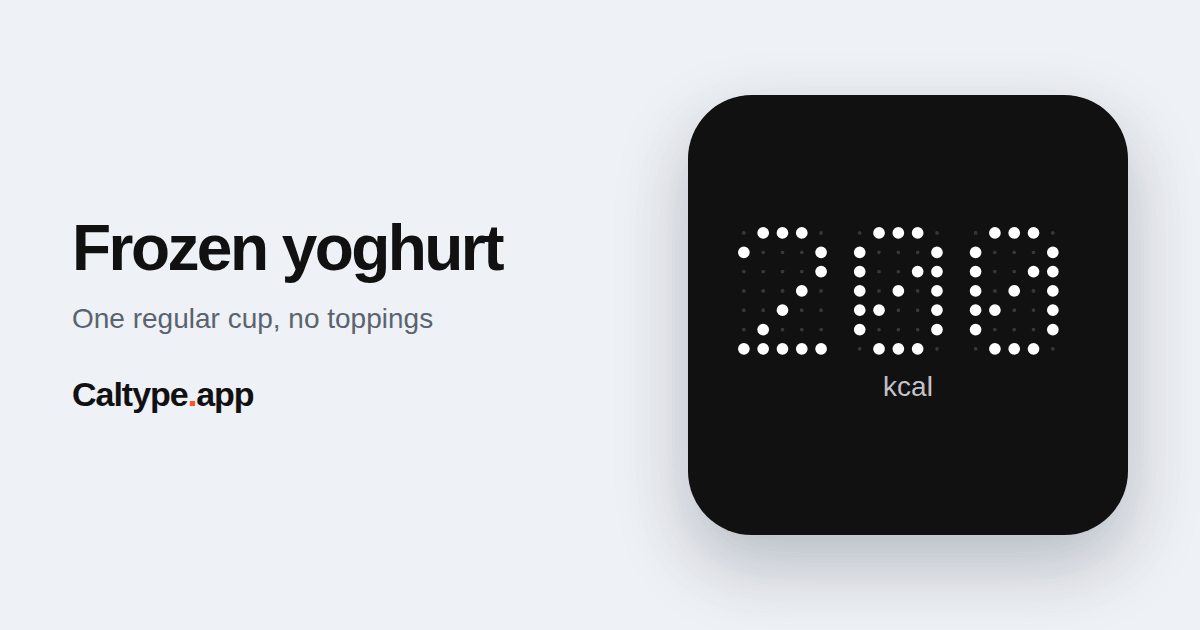
A cup of frozen yoghurt has about 200 kcal, before any toppings.
Portion
To burn it off

Frozen yoghurt is yoghurt with sugar, frozen and whipped so it's soft. It's lighter than ice cream on fat, but there's still a fair bit of sugar.
A regular cup is 200 kcal, with 38 g of carbs, 4 g of fat and 5 g of protein.
The toppings bar is where it changes. Fruit adds a little, but chocolate pieces, cookie dough and sauce add up fast.
Tips
- 1Pick fresh fruit as your topping.
- 2Go for the small cup, it's usually plenty.
- 3Choose one sweet topping, not three.
Where it comes from
Frozen yoghurt was invented in the United States in the early 1970s. H.P. Hood, a dairy company in New England, sold it as a soft serve dessert called Frogurt, a lower fat choice than ice cream. Many people found it too tart at first, and it took sweeter recipes and shop chains in the 1980s, such as TCBY, to turn it into a craze.
Where does our food come from? · Source: International Frozen Yogurt Association, Industry FAQs
Just type it
frozen yoghurt with strawberries
In Caltype you type what you ate like a note to yourself, and it's counted for you. No weighing, no scrolling through a database.
Share
Questions
Is frozen yoghurt lower than ice cream?
Usually a bit lower in fat. The sugar is often similar.
How much protein is in frozen yoghurt?
About 5 g in a regular cup.
Do toppings add a lot?
Fruit adds a little; sweets, sauces and cookie bits add a lot more.
How do I count frozen yoghurt that's sold by weight?
Plain frozen yoghurt is roughly 150 kcal per 100 g. The toppings go on the scale too, and chocolate or cookie bits are a lot more per gram, so count those separately.
How many calories in frozen yoghurt with granola?
A small scoop of granola, about 30 g, adds roughly 140 kcal. So a regular cup with granola comes to about 340.