How many calories in a Greek salad
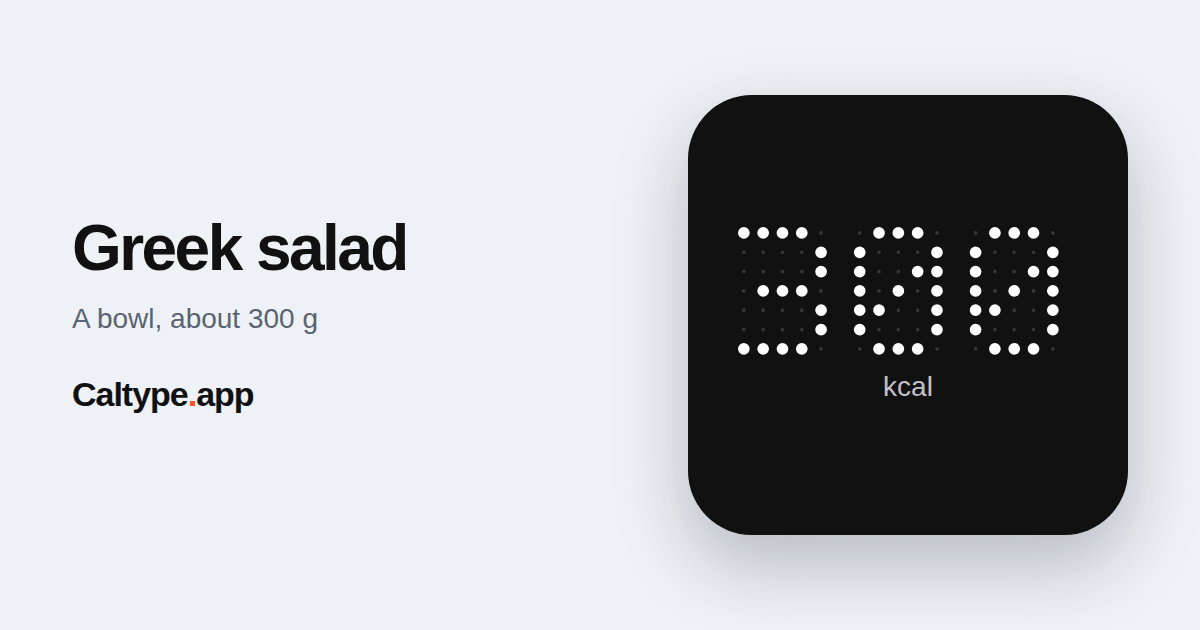
A bowl of Greek salad has about 300 kcal, with 25 g of fat from the oil and the feta.
Portion
To burn it off
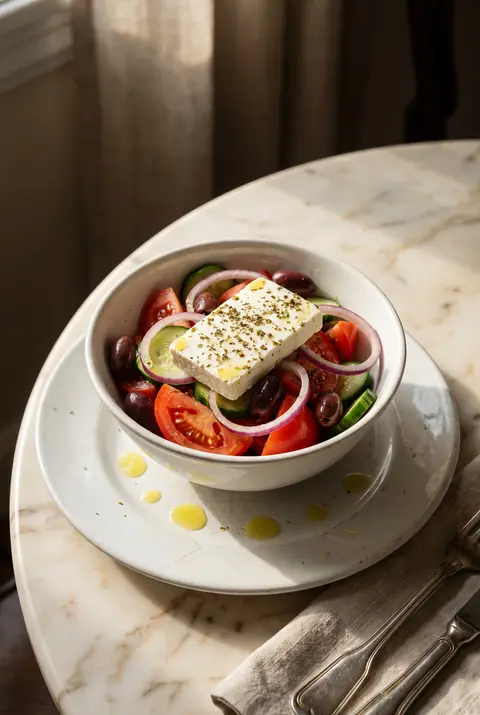
A proper Greek salad is tomato, cucumber, red onion, peppers and olives, with a slab of feta on top and a good glug of olive oil. No lettuce, if you ask anyone in Greece.
A bowl is 300 kcal, with 25 g of fat, 12 g of carbs and 8 g of protein. Nearly all of it is the feta and the oil, the vegetables barely count.
The bread you mop the oil up with is extra. At a taverna it often comes with it, so it's worth knowing.
Tips
- 1Ask for the oil on the side and add what you want.
- 2Add grilled chicken or prawns to make it a full meal with more protein.
- 3Share one as a side with a grilled main.
Where it comes from
Its Greek name, horiatiki, means village salad, and it grew out of the simple summer meals of farmers: tomato, cucumber, onion, olives and whatever local cheese there was. As a fixed tavern dish with feta on top it is surprisingly young, probably from the 1960s or early 1970s, when tourism to Greece took off. Some older Greeks first saw it as a pricey dish for tourists.
Where does our food come from? · Source: Aglaia Kremezi, Horiatiki, the peasant roots of Greek salad
Just type it
greek salad
In Caltype you type what you ate like a note to yourself, and it's counted for you. No weighing, no scrolling through a database.
Share
Questions
Is a Greek salad a light meal?
Light, yes, at 300 kcal. It's low in protein though, so you may be hungry again soon.
How much fat is in a Greek salad?
About 25 g, from the olive oil and the feta.
Does the feta add a lot?
It's one of the two big parts, along with the oil. The vegetables are only a small part of the 300.
Do the olives in a Greek salad add many calories?
Not many, about 5 to 10 kcal an olive depending on size. A handful of six or so is around 40 kcal.
What is a Greek salad called in Greece?
Horiatiki, which means village salad. It's the same bowl and the same 300 kcal.