Who invented sushi?
Nobody invented sushi in one go. It began as fish fermented in rice to keep it, and nigiri, the kind most people know, is credited to Hanaya Yohei in Edo, now Tokyo, around 1824.
Sushi8 pieces of maki roll300kcal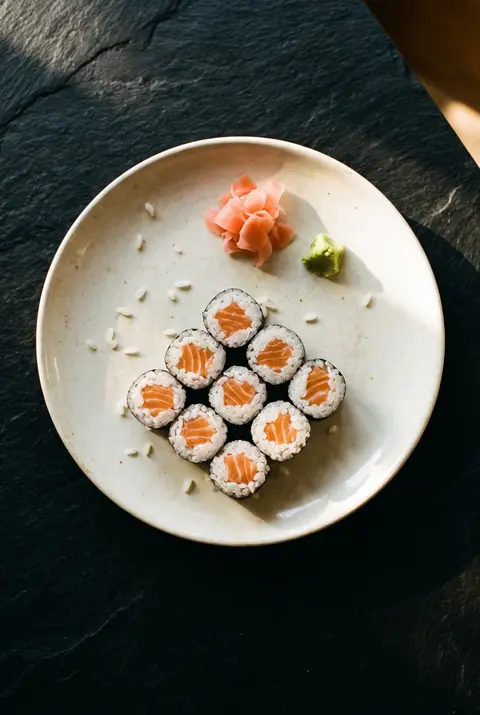
A way to keep fish
The oldest sushi was about storage more than taste. Fish was packed with salt and rice and left to ferment, which stopped it from going bad. This is called narezushi. It most likely started in the river lands of Southeast Asia, around the Mekong, and was written about in China around the 4th century. It reached Japan along with wet rice farming. A Japanese law code from 718 names sushi among tributes to the court, though scholars argue about what that sushi was.
Eating the rice too
For centuries the rice was thrown away and only the fish was eaten. That changed in the Muromachi period, between 1336 and 1573. People started eating the fish after a shorter ferment, while it was still partly raw, and they ate the rice with it. That small change turned a preserving trick into a meal. Then in the Edo period, from 1603, cooks began adding vinegar to the rice instead of waiting for it to sour on its own. Sushi could now be made the same day.
Hanaya Yohei and fast food in Edo
Nigiri, a slice of fish pressed onto a small ball of vinegared rice, is credited to Hanaya Yohei, who opened his shop in Ryogoku, Edo, in 1824. Wikipedia says he is believed to be the inventor, so that part is likely rather than proven. Nippon.com says he first sold sushi from wooden boxes carried through the streets at night, then from a stall. A piece cost 8 mon, under 100 yen in today's money. With no fridges, fish like gizzard shad was firmed up in vinegar first.
How it spread
Yohei's shop stayed famous for a century. The Great Kanto Earthquake of 1923 cost it customers, and it closed in 1930. The earthquake also scattered Tokyo's sushi chefs, and some took the Edo style to other parts of Japan. In 1958 Yoshiaki Shiraishi opened the first conveyor belt sushi restaurant, which made it cheap and quick again. Sushi was served in the United States by the early 1900s, and the California roll came later, with Los Angeles and Vancouver both claiming it.
What it is today
Today sushi means many things: nigiri, rolls, sashimi on the side, supermarket boxes and counters where a chef hands you one piece at a time. The vinegar in the rice is the link back to Edo, and back further to the old fermented fish. A typical meal is a plate of nigiri, or a few rolls cut into slices. Most of what you eat is rice, with fish, egg or vegetables on top.