Who invented espresso?
Several Italians did, one machine at a time. Angelo Moriondo patented a steam coffee machine in 1884, Luigi Bezzera and Desiderio Pavoni showed caffè espresso in Milan in 1906, and Achille Gaggia gave it its crema.
EspressoOne espresso, a single shot of about 30 ml3kcal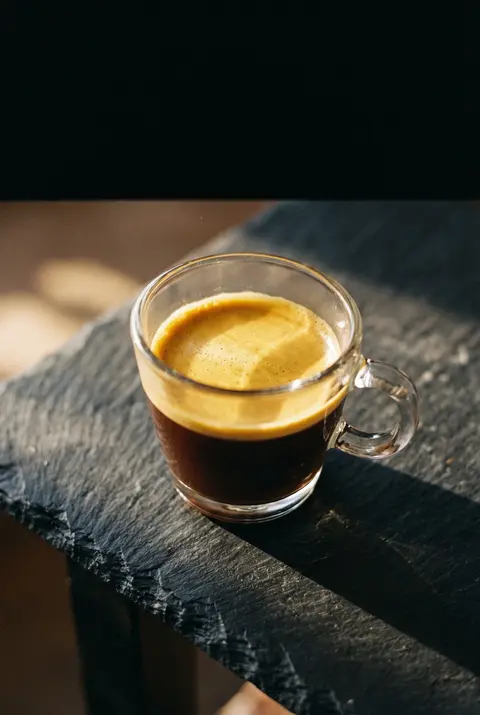
A machine in Turin
The story starts in Turin in 1884. Angelo Moriondo got a patent for new steam machinery for the economic and instantaneous confection of coffee beverage. It used water and steam, but it brewed coffee in bulk, not one cup at a time. Smithsonian Magazine notes that no machine of his survives and there are not even photographs of it. So Moriondo is the first name in the story, even though nobody today can drink what his machine made.
One cup, made fast
The step that made espresso what it is came from Milan. Luigi Bezzera built what Britannica calls the first known machine to force steam and hot water through ground coffee into a single cup, cutting the brew from several minutes to about 30 seconds. In 1903 Desiderio Pavoni bought his patents and added a pressure release valve and a steam wand for milk. In 1906 the two showed their Ideale machine and caffè espresso at the Milan World's Fair.
Fast, or made for you
In Italian, espresso means fast or express, and Britannica calls the drink arguably the first fast food. Smithsonian Magazine gives a second sense, made on the spur of the moment, meaning made just for you, right now. Both fit. Britannica dates Bezzera's machine to 1902, and Smithsonian Magazine simply says the early 1900s. What nobody disputes is that the drink was born in northern Italy in the first years of the 1900s.
Gaggia and the crema
Early espresso was made with steam at about 1.5 to 2 bars of pressure. Achille Gaggia changed that with a lever and piston machine that pushed water through the coffee at 8 to 10 bars. Smithsonian Magazine tells how the result came out topped with a layer of foam, and people were wary of it until Gaggia started calling it caffè crema. That golden foam, the crema, is what Britannica says holds the aroma in. Smithsonian calls this the birth of contemporary espresso.
Espresso today
In 1961 the Faema E61 brought a motor pump giving a steady 9 bars, and that is still the basic idea behind most café machines. Espresso became part of daily life in Italy, woven into the day, as Britannica puts it, and from there it shaped coffee drinking around the world. It is the base of the cappuccino and the latte. A single espresso is still a small cup made in about half a minute, which is pretty much the point of the name.