Who invented french fries?
Nobody can prove it. Belgium tells of villagers frying potatoes when the river froze in the 1680s, but historians point to Paris, where fried potatoes were sold on the Pont Neuf in the 1780s.
ChipsMedium fries320kcal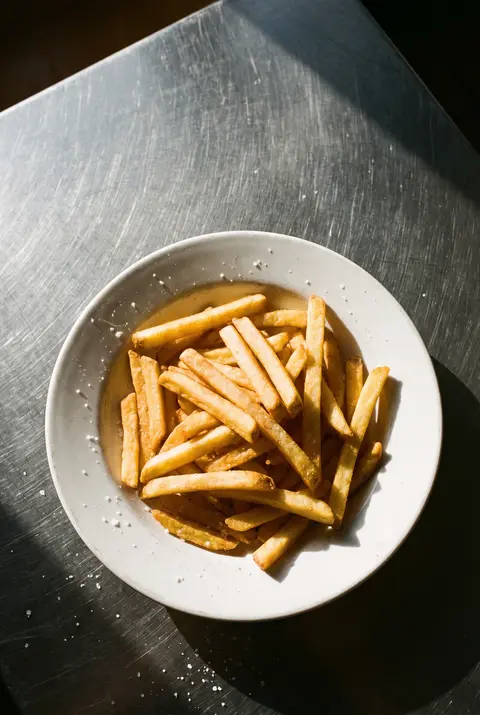
The frozen river
The Belgian story is lovely. Villagers along the Meuse, near Namur, liked to eat small fried fish. When the river froze in winter there were no fish, so they fried potatoes instead. According to The Brussels Times, the tale comes from a manuscript written in 1781 by Joseph Gérard, which dates the habit to 1681. His descendant Jo Gérard, a Belgian journalist and historian, found it and made it famous.
The problem with the legend
The historian Pierre Leclercq does not believe it. He says the potato only reached the Namur area around 1735, about fifty years after the story is set. He also points out that frying fat was expensive, far too dear for poor villagers to waste on potatoes. His view, in his own words as quoted by The Brussels Times, is that the fried potato as we know it was not born in Belgium. So the most famous origin story is a legend, and a good one.
The case for Paris
Leclercq looks to Paris instead. Fried sliced potatoes were sold there in the 1780s, and National Geographic says street vendors sold them on the Pont Neuf, the old bridge over the Seine. Thomas Jefferson was in France as the American minister from 1784 to 1789, and his recipe notes include potatoes fried raw in small cuttings. National Geographic also mentions Spain, since the Spanish met the potato first and liked to fry in oil. Britannica simply calls the origin uncertain.
How Belgium got them anyway
Around 1844 a fairground showman, Frédéric Krieger, nicknamed Monsieur Fritz, sold fries in Brussels, reportedly as Paris style fried potatoes. From there they became Belgian street food. The name french fries has its own legend. American soldiers in Belgium during the First World War ate them, heard French spoken around them and called them French. Britannica calls that an oft repeated claim, so treat it with care. In 2003 some in the US Congress renamed them freedom fries, until 2006.
What they are today
Today fries are everywhere, and Britannica notes that fast food chains made them a global habit. Belgium kept its own way with them. The frietkot, the fry shack, is recognised as cultural heritage across the country, and Belgium is home to a museum about fries. A usual portion is a cone from a fry shop or a side next to a burger, often with a sauce. They are potatoes plus the oil they cook in, so the size of the portion is what counts.