Who invented the cappuccino?
No single person did. The name comes from the brown robes of the Capuchin friars, the idea began in 18th century Vienna as the Kapuziner, and the Italian cappuccino arrived in the early 1900s with the espresso machine.
CappuccinoRegular cappuccino, cow's milk110kcal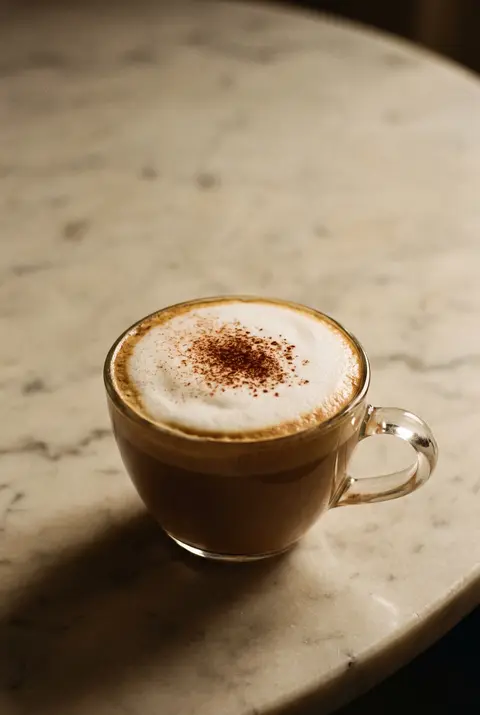
Named after friars
The Capuchins are a Catholic order of friars founded in Italy in the 16th century. They wore brown habits with a long hood, and in Italian a hood is a cappuccio. Britannica points to their brown hooded cowls and shaved heads as the look the drink was named after. The colour is the whole joke. Coffee lightened with a bit of milk turns roughly the shade of a friar's robe, and people noticed.
It started in Vienna
The first known version was not Italian at all. Britannica says the earliest record comes from the coffeehouses of Vienna in the 18th century, where the Kapuziner was a popular drink of coffee and whipped cream, usually with sugar. USC Scribe adds spices to that list. Kapuziner is simply German for Capuchin. So the friars' name was on a coffee long before anyone in Italy had a machine to make espresso.
The machine changes everything
The Italian cappuccino could only exist once there was espresso. Britannica says it first appeared in the early 20th century, after the espresso machine was invented. Now the drink was a short shot of strong coffee with steamed milk and foam on top, not filter coffee with cream. USC Scribe describes the Italians putting their own spin on the Viennese drink, with milk, milk froth and sometimes sugar and cinnamon. The name stayed, only now in Italian.
From Italian bars to the world
For a while the machines were big and expensive. After the Second World War they became cheaper and easier to find, and Britannica says the cappuccino became the standard Italian breakfast drink. Outside Italy it caught on first in Britain, where people already drank coffee with milk at any hour. In the United States it was served in Italian restaurants as early as the 1930s, but it only became common in the 1980s with the rise of national coffee chains.
What a cappuccino is today
The classic recipe is easy to remember. Britannica describes it as equal parts espresso, steamed milk and frothed milk, sitting in three layers. That is what sets it apart from a latte, which has more milk and less foam. In Italy it is still above all a breakfast drink. USC Scribe mentions sugar and cinnamon in the Italian version, and both are still up to you.