How many calories in a matcha latte
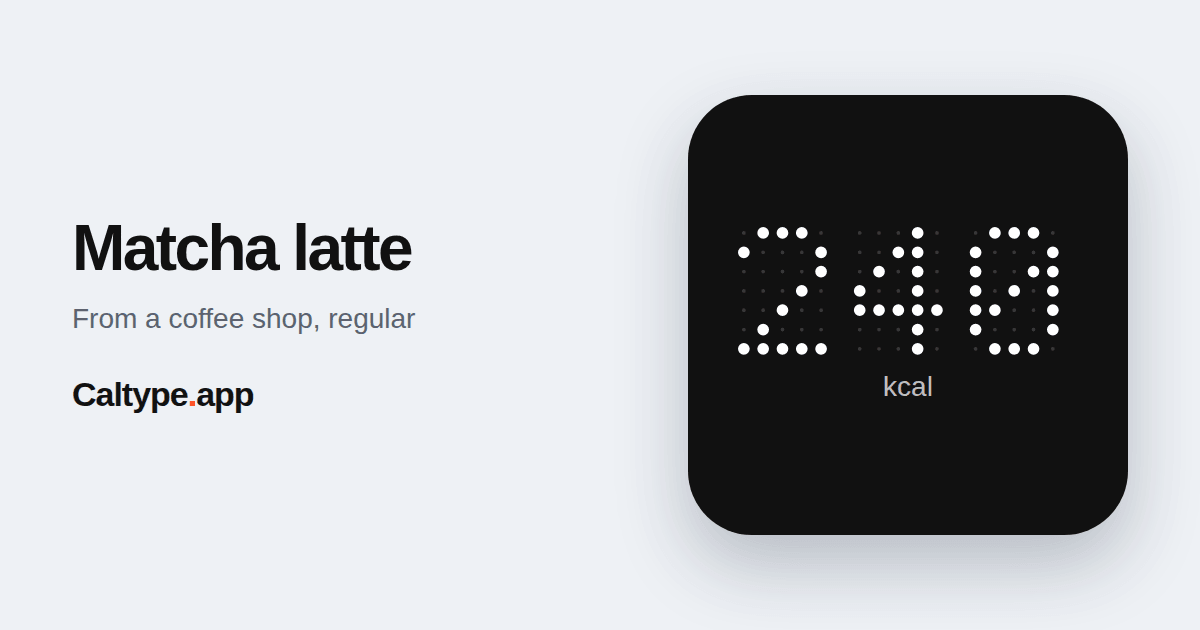
A café matcha latte has about 240 kcal, most of it from the milk and the sweetened matcha mix.
Portion
To burn it off
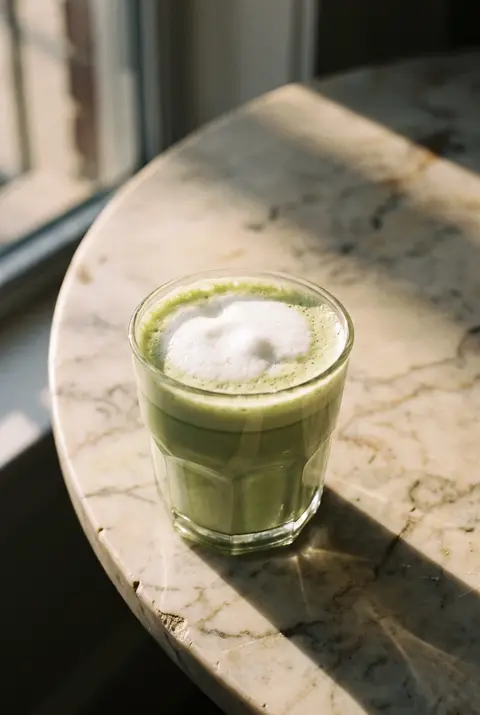
Matcha itself is powdered green tea and adds almost nothing. What you're counting is the milk, plus the sugar that most coffee shop matcha powders come with.
A café one is 240 kcal with 34 g of carbs, and one you whisk at home is 130 with 13 g. The 110 kcal gap is mostly sugar you didn't ask for.
It does bring 12 g of protein from the milk, so it's more of a snack than a drink. Count it like one.
Tips
- 1Ask if they've got unsweetened matcha, some places do.
- 2Make it at home with plain matcha and your usual milk, it's 130 instead of 240.
- 3Go for a small, it's the same green and the same calm.
Where it comes from
Powdered tea reached Japan in the late 1100s with the Zen monk Eisai, who had studied in China and brought back tea seeds. It became the heart of the Japanese tea ceremony. The name joins matsu, to rub, and cha, tea, because the leaves are ground to a fine powder. Whisking it into steamed milk is a much later café idea.
Just type it
matcha latte
In Caltype you type what you ate like a note to yourself, and it's counted for you. No weighing, no scrolling through a database.
Share
Questions
Is a matcha latte higher than a normal latte?
From a café, usually yes. A matcha latte is about 240 kcal and a regular latte about 150, because of the sweetened powder.
Does matcha powder have calories?
Plain matcha has very few. Sweetened matcha mixes are where the extra comes from.
How many calories in a homemade matcha latte?
About 130 kcal with plain matcha and milk.
How much does honey add to a matcha latte?
A teaspoon of honey is about 20 kcal, so a homemade one goes from 130 to about 150.
Does ceremonial grade matcha have fewer calories?
No, the grade is about taste and colour. Plain matcha of any grade adds only a few kcal, it's the sugar in sweetened mixes that counts.
Did you know?
With matcha you drink the leaf itself. Dried green tea leaves are ground into a fine powder and whisked in, rather than steeped and thrown out.
Drink facts · Source: Harvard T.H. Chan School of Public Health, The Nutrition Source