Who invented wine?
Nobody knows who made the first wine, but the oldest traces found so far come from Georgia, from around 6000 BC. Clay jars dug up south of Tbilisi still held the chemical signature of grape wine.
WineGlass (150 ml)125kcal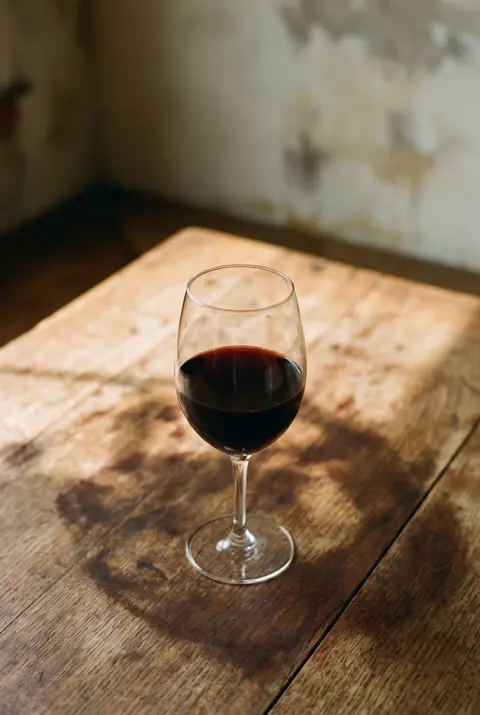
Jars in the hills of Georgia
About 50 kilometres south of Tbilisi, in the province of Lower Kartli, sit two Neolithic villages called Gadachrili Gora and Shulaveris Gora. Archaeologists found pieces of large clay jars there, some big enough to hold more than 300 litres. A few seem to have grape clusters shaped around the mouth. Their small bases suggest they were partly sunk into the ground, much like the qvevri jars Georgians still make wine in today. The jars date from somewhere between 6000 and 5000 BC.
How you prove a jar held wine
Old pottery can look like anything, so a team led by Patrick McGovern of the University of Pennsylvania Museum tested what was soaked into the clay. They looked for tartaric acid, which in this part of the world comes in large amounts only from grapes, and found it along with malic, succinic and citric acid. That fingerprint means wine. The study came out in 2017 in the journal PNAS. It pushed the record back from Hajji Firuz Tepe in Iran, where wine residue dates to about 5400 to 5000 BC.
Nobody invented it
There is no first winemaker with a name. Crushed grapes left in a warm jar will start to ferment on their own, so wine was probably found long before anyone wrote things down. What the Georgian jars show is that people were already doing it on purpose. The researchers think the grapevine had been tamed and was being grown and replanted by then. Georgia today grows more than 500 grape varieties for wine, which fits a very long history of growing vines.
From the Middle East to Europe
Britannica puts grapevine growing in the Middle East by 4000 BC and probably earlier, and Egyptian records from around 2500 BC show grapes being used for wine. The Greeks then planted vineyards around the Mediterranean, from the Black Sea to Spain. The Romans carried vines up the big river valleys of Europe, the Rhine, the Moselle, the Danube, the Rhone and the Loire. Many of the regions they planted, like Burgundy, Bordeaux and Champagne, are still famous for wine today.
Across the oceans
After Columbus, Spanish missionaries brought vines to Chile and Argentina in the 1600s and to Baja California in the 1700s. European settlers later started wine industries in California, Australia, New Zealand and South Africa. In the 1800s Louis Pasteur worked out how fermentation actually works, which made wine far more reliable. Today a typical pour is a glass of about 150 ml, and the drink in it still comes from the same grape and the same idea as those Georgian jars.