Who invented pizza?
Nobody invented pizza on one day. It took shape as cheap street food for the working poor of Naples in the 1700s and 1800s, and Italian immigrants carried it to New York around 1900.
Pizza margheritaWhole pizzeria margherita1,000kcal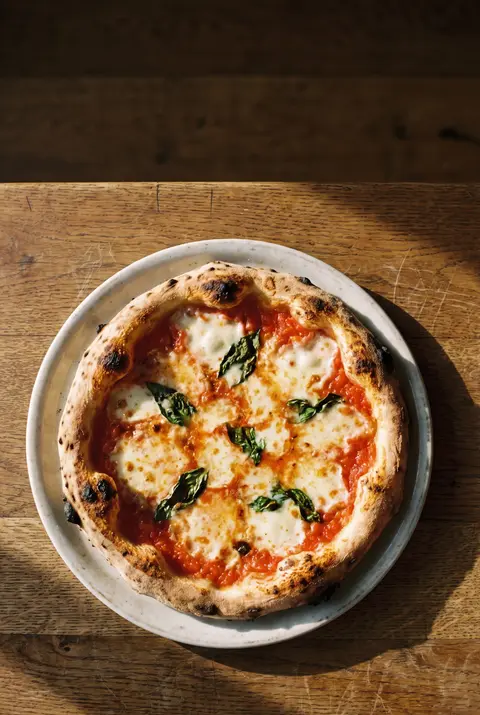
Bread with something on top
People have put toppings on flat bread for a very long time. The ancient Egyptians, Greeks and Romans all ate flatbreads with things on them. That is not pizza yet, but it is the idea. The pizza you would recognise comes from one city, Naples, in the south of Italy. In the 1700s and 1800s it was a busy, crowded place, and a lot of its people were poor and worked long days for little money. They needed food that was cheap and quick, and that they could eat on the move.
Street food for Naples
Pizza filled that gap. Street sellers offered flat dough with simple toppings like tomatoes, cheese, anchovies and garlic. You bought a slice and ate it walking. The writer Matilde Serao described it in the late 1800s as cheap food of the street. Tomatoes were not an easy sell at first, either. They belong to the nightshade family, and many people looked at them with suspicion. In Naples they won, and the red topping became the base of almost everything that followed.
The queen and the Margherita
The best known story goes like this. In 1889 King Umberto I and Queen Margherita visited Naples, and a pizza maker named Raffaele Esposito made three pizzas for them. The queen liked the one with tomato, mozzarella and basil, red, white and green like the Italian flag, and it was named after her. A letter from Camillo Galli, head of the royal table, is said to have called the pizzas excellent. Britannica calls it a popular legend, and historians have good reasons for doubt.
Why historians doubt it
In 1853, decades before the royal visit, the writer Emanuele Rocco already described pizza topped with basil, mozzarella and tomato. National Geographic reports that the signature on the famous letter does not match the real signature of the official said to have written it, and the official gazette of the time does not mention the event. The Brandi family took over the pizzeria in 1932, and some historians suspect the letter was made for marketing. So the pizza is real. The royal birth certificate is probably not.
From Spring Street to the world
Neapolitan immigrants brought pizza to American cities in the late 1800s and early 1900s. In 1905 G. Lombardi's on Spring Street in Manhattan got its licence, one of the first documented pizzerias in the United States. After the Second World War pizza boomed, and Britannica says there was soon hardly a small town without a pizzeria. Today a typical serving is a few slices or one whole personal pizza, and the Neapolitan basics of dough, tomato and cheese are still the heart of it.