Who invented beer?
No one person invented beer. The oldest traces found so far are about 13,000 years old, in Raqefet Cave in Israel, where hunter gatherers seem to have brewed from wheat or barley.
BeerHalf litre (500 ml), a large glass on the continent215kcal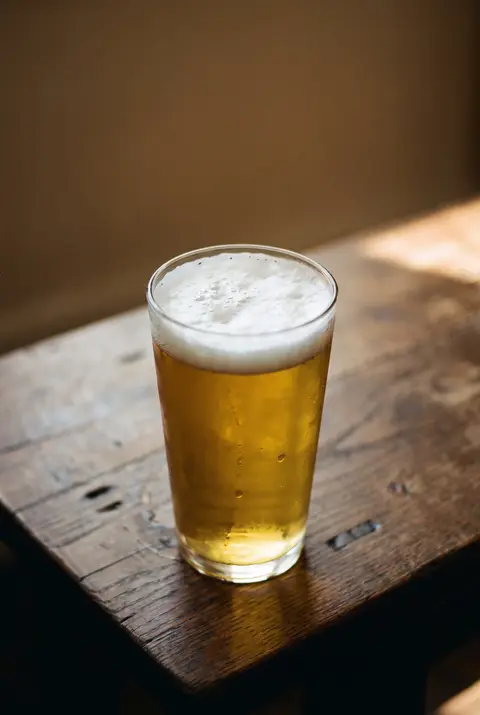
Beer in a graveyard cave
The oldest beer we know of was found in Raqefet Cave, near Haifa in Israel. The cave was a burial site of the Natufians, hunter gatherers who lived in the eastern Mediterranean. A team led by Stanford archaeologist Li Liu studied stone mortars there and found starch and tiny plant remains typical of turning wheat or barley into alcohol. The traces are between 11,700 and 13,700 years old. Liu called it the oldest record of man made alcohol in the world.
Closer to porridge than lager
This was not a cold pint. The researchers think it was more like a thin porridge or gruel. They describe three steps. First the grain was left to sprout to make malt. Then it was mashed and heated. Then wild yeast from the air did the rest. The team believes it was brewed for feasts honouring the dead. Co-author Jiajing Wang said beer making was part of ritual and feasting, a way of holding a group together.
Did beer come before bread
The find fed an old argument. For about 60 years some scholars have suggested that people may have started farming cereals partly to make beer, not only bread. The Raqefet traces are older than the earliest bread remains found so far, in Jordan, which gives that idea some support. It is still a theory, built on one site and very small traces. What is clear is that brewing did not need farms first. The Natufians did it as hunter gatherers.
From Sumer to Bavaria
Britannica traces beer made from barley to Sumer and Babylonia, and Egyptian tomb pictures from about 2400 BCE show it being made. In medieval Europe monasteries kept the craft going. Hops were used in Germany by the 11th century. In April 1516 the Bavarian dukes Wilhelm IV and Ludwig X met in Ingolstadt and ruled that beer should be made from barley, hops and water alone. Yeast was not named. The word Reinheitsgebot for that rule only appeared in 1909.
What it is today
Around the 1420s German brewers began using yeast that sinks to the bottom of the tank, which led to lager. In the 1860s Louis Pasteur showed how yeast works, and the Danish scientist Emil Hansen learned to grow pure yeast, which made brewing at scale reliable. Today it is brewed in steel tanks run by computers and sold all over the world. A typical serving is one bottle or can of 330 ml, a British pint of 568 ml, or half a litre in much of Europe.